Rural Health Virtual Summit 2026
For the third year in a row, TytoCare and the American Telemedicine Association (ATA) brought together leading rural health innovators for an honest, practical conversation about what it really takes to expand access beyond traditional clinic walls.
Rural providers are navigating workforce shortages, rising demand, financial strain, and geographic barriers, all at once. This summit is designed for leaders who are actively rethinking care delivery models to close access gaps without building more brick-and-mortar clinics or overextending already-burned-out teams.
Rural communities can’t wait for more clinicians to appear. The future depends on smarter resource allocation, distributed care models, and clinical-grade remote exams that replicate the in-clinic experience without compromise.
SPEAKERS
FEATURING
AGENDA
Introduction
Rural Health Care: Federal Telehealth Policy
How Satellite Clinics Address Rural Workforce Shortages
Rooted for Resilience: Growing Telehealth Programs that Rise Above the Storm
Relationships: The Heart of Telehealth – Building Connections Between Families and Healthcare Providers in Schools
Empowering Rural Oklahoma: Using Virtual Care to Increase Access to Healthcare Across Oklahoma
Roundtable
Rural Health Care: Federal Telehealth Policy
Alexis Apple outlined how recent federal policy changes are accelerating telehealth adoption and making it a core part of care delivery—especially in rural communities. With expanded Medicare flexibilities, support for audio-only care, and growing investment in remote monitoring and hospital-at-home models, telehealth is becoming a critical tool to overcome workforce shortages and access barriers. Her key message: virtual care is no longer optional—it’s essential to building scalable, sustainable healthcare in rural settings.
“Without telehealth, without virtual care, we aren’t going to be able to get access to care to millions of people across the country — and that’s especially true for rural communities facing distance, workforce shortages, and limited specialty access.”
Building Sustainable Rural Health Systems with Virtual Care
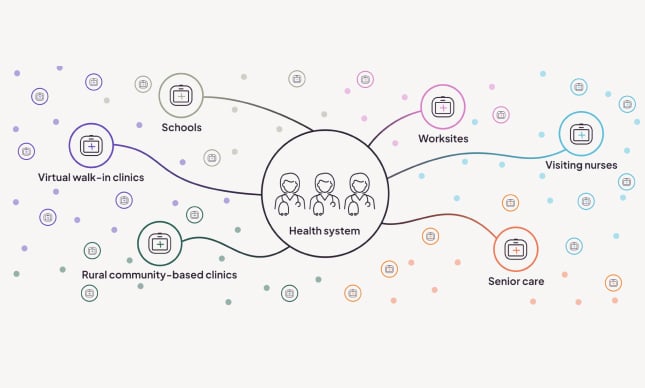
Mark Pals shared how Sanford Health has built one of the largest virtual care networks in the U.S., using a hub-and-spoke model to extend over 80 specialties across 100+ rural sites. By combining telepresenters, remote exams, and clinician-driven programs, Sanford has reduced travel burden, kept care local, and scaled access without adding on-site providers. His core message: virtual care isn’t just about convenience — it’s a critical strategy for sustaining rural healthcare systems and meeting workforce shortages at scale.
“In 2025, we saved providers and patients over 18 million miles of travel time, which equates to over $40 million saved in fuel, lost wages, and other travel-related costs.”
Bridging the healthcare access gap in rural America with remote physical exams
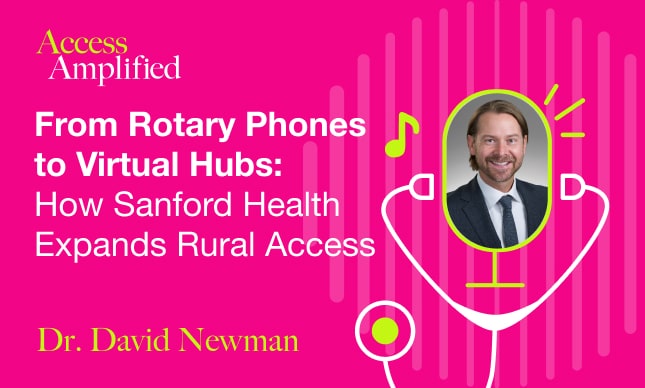
Sanford Health, the largest rural healthcare system in the United States, was looking for a virtual care solution that would help them improve access to high-quality, affordable care for their patients. They partnered with TytoCare to integrate their virtual care offerings with the goal of improving access to healthcare care and are investing long-term in virtual care as a modality to complement their in-person services.

Dr. David Newman
A Scalable Model for Frontier Healthcare Delivery
Lacey Finkbeiner shared how Horizon Healthcare is using telehealth to sustain access across some of the most remote communities in South Dakota. By integrating virtual care across medical, dental, and behavioral health services, Horizon is reducing travel, improving patient engagement, and keeping clinics operational despite workforce shortages. Her key message: in frontier settings, telehealth isn’t just a convenience — it’s what keeps care accessible and communities supported.
“It takes nearly two hours to even get to a specialist… we’ve been able to utilize telehealth to connect to those specialists and eliminate that extended travel time, that gas money, that hotel stay — allowing people to stay in their town and still get the care that they need.”
Lacey Finkbeiner
Trust as the Foundation of Rural Virtual Care
Pam Hylton and Taylor Carlan focused on a critical but often overlooked factor in rural telehealth: trust. Sharing their experience launching school-based virtual care in Southwest Virginia, they showed how strong community relationships, consistent points of contact, and on-the-ground engagement are essential to driving adoption. Their core message: technology enables access — but it’s trust, familiarity, and human connection that make rural telehealth programs succeed.
“What we have found as we have gone on this new adventure is that relationships are really the heart of making those connections with schools — trust and community relationships make all the difference in a successful telehealth program.”
Enabling Local Care Through Scalable Virtual Access
Dr. Bradley Anderson and Jared Droze shared how OSU Medicine is scaling virtual care across Oklahoma to address widespread provider shortages and geographic disparities. By connecting over 40 sites with a mix of specialty consults, community-based models, and low-barrier technology, they’re enabling patients to stay local while accessing high-quality care. Their key message: virtual care isn’t a separate service — it’s a foundational strategy for delivering healthcare in rural communities.
“When you look at all the shortage areas, this is really a call to action — how can we bring high-quality healthcare access to rural communities, and how do we use virtual care to bridge that gap and make that possible?”
“I do feel like a hybrid model with connection back to local providers is going to be key — making sure we can increase access overall while still supporting those more complex cases that require higher-level specialty care.”
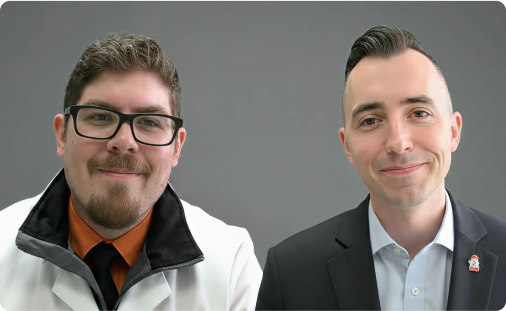
Jared Droze and Dr. Brad Anderson
Learn more
A New Era of Healthcare Delivery: Providing Access to Rural and Underserved Populations
In today’s healthcare climate, reaching rural and underserved populations is vital. What is telehealth’s role in bringing better healthcare to these members? Our recent Fierce webinar offers practical and effective solutions to enhance patient outcomes, reduce costs, and improve healthcare access for rural and underserved populations. Learn about telehealth’s potential to increase patient retention and […]
Driving Rural Health Transformation with Hybrid Remote Clinics
Addressing the realities of rural healthcare access Across the United States, rural communities continue to face significant challenges in accessing timely, high-quality healthcare. Long travel distances, limited staffing, and constrained resources contribute to disparities in care that affect millions of people. These challenges are not new, but they are increasingly urgent as rural hospitals and […]
Tackling staff shortages in rural areas with virtual care
Rural America is disproportionally underserved when it comes to healthcare due to staff shortages and a lack of access to quality services. This blog post explores how virtual care can be leveraged as a solution to combat these staff shortages, providing improved convenience and cost-effectiveness for those living in rural areas. Overview of rural America’s […]
Unpacking CMS’ $50 Billion Investment into Rural Healthcare
Join TytoCare and Second Opinion Media for a deep-dive conversation on what CMS’ investment means, which innovations will gain the most traction, and how rural hospitals can navigate both the challenges and the unprecedented opportunity ahead.
A New Era of Healthcare Delivery: Providing Access to Rural and Underserved Populations
In today’s healthcare climate, reaching rural and underserved populations is vital. What is telehealth’s role in bringing better healthcare to these members? Our recent Fierce webinar offers practical and effective solutions to enhance patient outcomes, reduce costs, and improve healthcare access for rural and underserved populations. Learn about telehealth’s potential to increase patient retention and […]
Driving Rural Health Transformation with Hybrid Remote Clinics
Addressing the realities of rural healthcare access Across the United States, rural communities continue to face significant challenges in accessing timely, high-quality healthcare. Long travel distances, limited staffing, and constrained resources contribute to disparities in care that affect millions of people. These challenges are not new, but they are increasingly urgent as rural hospitals and […]
Tackling staff shortages in rural areas with virtual care
Rural America is disproportionally underserved when it comes to healthcare due to staff shortages and a lack of access to quality services. This blog post explores how virtual care can be leveraged as a solution to combat these staff shortages, providing improved convenience and cost-effectiveness for those living in rural areas. Overview of rural America’s […]
Unpacking CMS’ $50 Billion Investment into Rural Healthcare
Join TytoCare and Second Opinion Media for a deep-dive conversation on what CMS’ investment means, which innovations will gain the most traction, and how rural hospitals can navigate both the challenges and the unprecedented opportunity ahead.