Virtual Care at the Edge: How Safety-Net Providers Are Scaling Smarter, Not Harder
Across the United States, community health centres (CHCs), federally qualified health centres (FQHCs), and other safety-net providers are the backbone of care for underserved populations. These organisations face growing challenges: workforce shortages, increasing patient demand, and cost constraints. Instead of trying to do more with less, many are finding ways to work smarter using hybrid virtual care and streamlined workflows to reach more people and improve outcomes without burning out their teams.
Why Scaling Smarter Matters
Scaling healthcare in underserved areas isn’t just about adding more clinics or staff. It means creating systems that help providers care for more patients efficiently, while improving the experience for both clinicians and patients. Successful safety-net providers are focusing on:
- Extending access without needing to grow headcount proportionally
- Making each encounter more efficient and meaningful
- Reaching patients wherever they are: rural, urban, or remote
- Supporting patients who face technological or social barriers
- Maintaining care quality and safety, even as demand increases
Virtual care has moved from being a pandemic stopgap to a core part of modern healthcare. The most successful programs bring together teams across departments—combining clinical expertise, operations, and technology—to deliver care that is both personal and scalable.
What Smart Scaling Looks Like in Safety-Net Settings
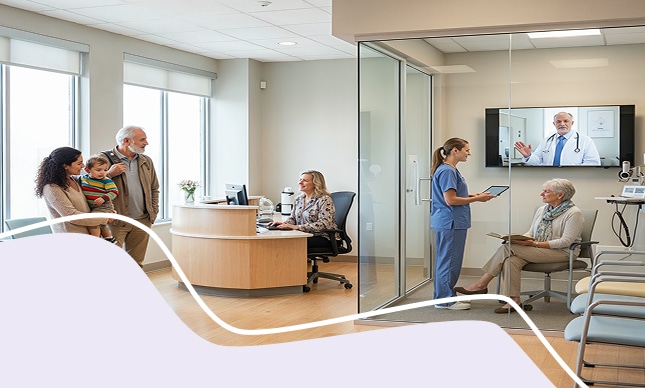
Hybrid models of care are at the center of this shift. By combining virtual and in-person visits, clinics can offer more flexible and accessible options for patients. This model is especially valuable for rural and resource-limited communities, where access to specialists can be limited. For example, a nurse or telepresenter in a local clinic can support a remote provider in conducting a full visit, cutting down on travel and wait times.
Strong infrastructure and operational readiness are key. Scaling virtual care effectively means more than having the right technology—it requires clear workflows, proper training, and a focus on team well-being. The goal is to make virtual care easy to use and aligned with clinic goals around access, equity, and efficiency.
Equity and accessibility by design should guide every virtual care initiative. Many CHCs and FQHCs serve patients who face barriers such as limited broadband, lower digital literacy, and transportation challenges. Programs that plan for these realities, like offering hybrid or audio-only options, tend to see higher engagement and better outcomes. Some health systems are even integrating broadband expansion into their community health strategies, creating benefits that go beyond healthcare alone.
Real-World Results & Impacts
The impact of smarter scaling is already visible. According to the National Association of Community Health Centers (NACHC), 98% of CHCs now offer telehealth services. In 2024 alone, telehealth enabled over 18 million visits nationwide. Studies show that hybrid care models can reduce missed appointments, increase follow-up rates, and strengthen the relationships between patients and clinicians. They also ease transportation burdens and make care more consistent for people who might otherwise delay or skip visits.
When designed thoughtfully, virtual care helps safety-net providers expand access, reduce staff workload, and improve health equity, all without building new clinics or hiring additional full-time providers.
The Road Ahead for Safety-Net Providers
Smarter virtual care isn’t a short-term fix; it’s a sustainable way forward. The goal isn’t to add more virtual visits, but to make digital and hybrid care a lasting part of how clinics operate. That means building simple, reliable systems that fit into daily workflows and support both patients and care teams.
To work in the real world, virtual care must fit patients’ lives. Many people in safety-net settings deal with limited internet access, work constraints, or language barriers. Programs that succeed offer flexible ways to connect—from hybrid visits to phone-based check-ins—and provide extra guidance to help patients navigate the process.
It’s also important to keep learning and adapting. Clinics should regularly ask: Are patients receiving care more quickly? Are providers less stressed? Are more people staying healthy closer to home? Ongoing review helps make sure virtual care keeps improving access and outcomes.
Finally, progress depends on teamwork. When health centers, payers, and technology partners collaborate, they can build sustainable care models that are easy to use and tailored to community needs. By taking this approach, safety-net providers can reach more people, lighten the load for clinicians, and keep care local, personal, and equitable, the way it should be.


Latest Blogs